Thursday, 8 December 2011

LIVING THE BRANDS

Click and check this out.

http://issuu.com/nathan0829/docs/final_powerpoint

This is flip book site of an assignment given to my students for the class "Cross-cultural Design". I employ a cultural studies approach in engaging with the notion of 'cross-cultural design'. Here, students reflect upon their own living experiences in engaging with brands around them. Their reflections collectively provide interesting textual materials (in a semiotic sense) that can be taken as a form of 'visual language and discourse' on the influence of brands in the living experiences of our youth. 

The visual discourse can then be analyzed to unveil certain patterns pertaining to how our youth give and create meanings through brands. 

Their way of life has been partly (if not significantly) conditioned and cultured by brands.

Perhaps we can do the same in analyzing the written discourses in fb comments on certain topics. 

Discourses are ways in which a particular language is used (or in some cases, regulated) to create meanings for a particular subject(and objects). Language here includes visual language. 

Here, the premise is that language (in many different forms, including visual) and the way it is used (in a discourse) by its users, create meanings. Active users may dominate and regulate meanings. Meanings here, are not stable, unless they are institutionally regulated such as in the army, or police unit, or even political parties, or certain groups of scholars,  etc. 


We can experience this as we move and engage in a discourse with different groups or types of people, including in fb groups. Different group of language users feature different ways of regulating the use of language (including visuals, such as those generated in the various fields of visual art, graphic, web design, blog design,fashion, textile, product, architecture, interior design, and many more).

In the case of brands, meanings are constructed and regulated by those with large capitals, such as big corporations/brands for examples. It is called, developing consensus and taste. These meanings are not natural at all, but created, constructed, regulated, dominated, sustained and controlled by such corporations (mostly through offline medium).

Those working in the advertising field, including those involved in developing brands, managing public opinions and perceptions (sometimes through deceptions), those working with a political party or a leader in spinning news or events (to work for their political masters), those working in planting communication strategies for a country (USA for example), know very well how to create, regulate, dominate, sustain and control discourses, thus meanings related to so many dimensions of our life, including cultural dimension.


All these work very well in sustaining 'egos' (false sense of self) to feed mostly economic or commercial ends. 

Where will all of us or humanity at large be heading to in this whole scheme of language and discourse, including all the 'brands' that are inhibiting our life? 

Are we living, or are we living the brands?

What brands are we identifying our false sense of self with? (be them social, political, ideological, philosophical, economic, cultural, educational, technological, etc)?

For more information on language and discourse, and its relation with 'power'  check out my April entry entitled "Amende Kajian Budaya ni?". 

But be warned, its very very very long, and in Bahasa Melayu.

FLOWERS AND FRUITS OF 6 YEARS OF GARDENING - GARDEN OF PRINTED WISDOM

For those interested, garden of printed wisdom can be accessed 

Its a flip book site for all the publication projects that I have been involved with. Everyone connected to the internet can now access it. It features the flowers and fruits of more or less 6 years of gardening at the Muzium & Galeri Tuanku Fauziah (MGTF) Universiti Sains Malaysia (USM).

You may browse and read the contents as you wish, with the hope that you may convert all the readings into wisdom. Hopefully too, such wisdom can be planted and passed through generations forever, to contribute towards a sustainable living world for them. 

Consider that as our collective investment for the future.  

MENGAPA DIPANGGIL 'KEBUN' (WHY ITS CALLED A GARDEN)

Excerpt from previously long-winded blog entry, for easy reading of my students.


"Kamu dalam Aku/You in Me" (2010)


THE GARDEN OF THE MIND                               

by Hasnul Saidon on Thursday, June 24, 2010 at 3:01am

Di ANTARA dinding putih Four Points sambil mengadap silvet kota Kuching berlatarkan megah Santubong. Ada ruang memecah ketepuan seni rupa Malaysia terselit di celah-celah pertemuan gelombang minda beberapa insan di UNIMAS. Seperti juga sel-sel otak yang hidup segar bila di'hubungkan' antara satu sama lain, kini diperlukan usaha untuk mengaitkan gelombang ini dengan yang lain di UPSI, UPM, UMS, MMU, UiTM, UNISEL, UMK.

Ada hikmah mengapa dilarang 'membakar jambatan' hubungan silaturrahim. Kerana fitrah otak yang berbilion selnya hanya hidup bila ia membina jambatan jalinan, tautan dan hubungan antara satu dengan lain; membina jaringan corak (coding fikir) yang bersifat:

1. Multidimensi
2. Saling berkait dan bergantungan (istilah 'independent'atau pengasingan melampau adalah anti-fitrah)
3. Modular (mikro dan makro dalam sinergi yang infinit)
4. Multi-arah
5. Multi-fokal/pusat
6. Bersifat baru (setiap saat sel mati diganti dengan yang baru)
7. Multi-peranan/disiplin/bidang

Marilah kita kembali pulang kepada fitrah. Pentas mulanya adalah pentas minda. Marilah menjadi saksi kepada perlakuan minda kita sendiri. Jadilah 'yang terbangun' dari belaian 'mimpi benda'.

Tq my dear Deng. Mind is our next frontier. See the World Cup. Many so called upsets. We called them upsets merely because the results were not in tuned with our 'logical' way of thinking. We have been so conditioned to be dependable on quantifiable statistics to control, manage, form and predict logical system. They are illusions, shadows. That legacy of industrial revolution that places science and all tangible (measurable) things (benda) as the sole basis of living is still haunting us in all fields and dimensions of our life.

The mind (and eventual body response to it that we call emotion), doesn't work in such a way. It displays quantum fluctuations that most quantitative means of measurement can't pick up. Quantum field is fluid, ever-changing, dynamic and displays the 7 characters or principles that I have listed above. Interestingly, we are the 'pewaris' of such principles, as epitomised by many forms of our own traditional art, culture and heritage. Sadly, such tradition has been tainted as 'pre-modern' by the snob legacy of modernism (and the so-called modernisation). Ironically, many developed, western and modern countries are now pondering a return to the true nature of our mind, instead of countries in the east.

Ramai 'pemberi hidayah' masa lampau, para Nabi, terutama Penghulu kita, Nabi Muhammad,begitu cinta kepada kita kerana sanggup berkorban jiwa raga untuk mewasiatkan kepada kita cara menala (tuning) minda kita agar kembali kepada fitrah.

Sadly, the way we go about our daily life and the matrix of our thinking patterns (and all the emotional attachments plus baggage) are slaving and destroying us and humanity. We need the return to our fitrah, our true nature. We have been steered off tangent, dissonant from the vibration (music) of the universe. We sing dissonant song, vibrate bad frequencies, detaching ourselves by burning bridges (of love and friendships), and many more anti-fitrah things.
Ironically, some people who like to claim to be 'alim' or 'pious' or warak are very much trapped by such anti-fitrah ways of thinking.
Mereka 'membakar jambatan' dan bukan membina ikatan, tautan serta hubungan kasih serta persahabatan. Macam mana otak dan minda nak sihat? Jadilah kita insan yang mindanya sakit, tidak 'in tuned' dengan fitrahnya. Minda sakit, disusul dengan reaksi emosi yang sakit. Keduanya menzahirkan perbuatan yang sakit dan menyakitkan. Bila perbuatan diulang-ulang, jadi tabiat. Bila dah jadi tabiat, ia keras jadi benda (hisap rokok contohnya, bila dah jadi tegar macam saya, susah nak buang toksiknya). Terzahirlah yang kita panggil penyakit (untuk diubat oleh doktor). Walhal, puncanya adalah minda. Doktor buang tanda je, bukan punca. Tidak hairanlah,sudah banyak terzahirnya pelbagai tanda-tanda penyakit minda dan emosi di serata dunia, dari peringkat individu hinggalah negara. Dari penyakit-penyakit pelik, gejala sosial, hinggalah kepada konflik (dalam keluarga, dalam persatuan, dalam parti dll, sesama 'orang alim') yang puncaknya adalah peperangan dan kehancuran kemanusiaan.

Siapakah musuh sebenar dan di mana musuh ini? Adakah musuh ini boleh kita tunding dengan jari? Atau ia berlegar secara ghaib dalam gelombang fikir serta perasaan yang kita namakan sebagai 'fikiran aku', 'perasaan aku'.

Oleh itu, apakah kemenangan sebenar? Kalaupun menang perang fizikal, Penghulu kita pernah berpesan, ada medan dan pentas perang yang lebih hebat, untuk kita damaikan dan menangi. Memang adakala kita kalah, adakala kita menang. Jika menang yang ini, barulah boleh declare 'kebebasan, kemerdekaan dan kedamaian/ketenangan' sejati.

Marilah kita 'membina jambatan', manjadi 'talian' ANTARA pelbagai dimensi fikir dan rasa yang sentiasa rindu untuk kembali kepada fitrah getarannya yang asal. Marilah kita menjadi saksi kepada proses serta perlakuan minda kita sendiri. Itu adalah pintu mengintai 'DIRI'.

"Mendiri" with projection


Deng, the moon up in BDC's sky is so bright. Jupiter is faithfully by its side. The stars blinking. I'm in Sarawak Darul Hana now, hopefully to return to the very reason why I chose to be a 'learner' when I migrated to UNIMAS before. True home is returning to one's soul)

May Allah Bless us.

Tq Deng for reminding. And yes, from quantum point of view (mind), distance and time are irrelevant. They may overlap.
 

Aku dalam kamu, kamu dalam aku, kita dalam segalanya, segalanya dari Yang Satu. 

'Dakap" (2010)
Every moment we think, we are creating and sending a frequency, and that frequency will eventually manifest physically into what we normally take as 'my life'. There is only now, whether we are thinking about the past or the future, we are thinking it NOW. SO, better occupy the NOW with 'jalan yang lurus' and all the tasbih and tahmid so that the mind is in a continuous state of awakening. That is our jihad.

Bayang (Shadow)


KEBUN JUMAAT.

Dipetik dari blog lepas yang amat berjela, dipendekkan untuk dikongsi dengan anak-anak buah, ambil berkat Jumaat.


"Lepas/Letting go" (2010)


TAMAN MINDA                                        

by Hasnul Saidon on Saturday, July 3, 2010 at 2:12am

Saya cuba sampaikan apa yang diajar pada saya sekadar yang mampu dan kita sama-sama mohon perlindungan serta petunjuk Allah.

Minda itu alat. Alat perlu ada tuan. Alat tidak boleh menguasai tuannya. Tuannya adalah yang menyaksikan perlakuan minda. Jika tidak, alat ini (minda) akan terus bising mencipta 'mimpi benda' sebagai makanan kepada bayangan diri yang disebut dalam bahasa moden sebagai 'ego' atau 'aku'.

'Aku' dan kehidupan fizikal dimungkinkan oleh proses minda. Ada yang menggelarnya mimpi kebendaan atau singkatnya mimpi benda. Kehidupan dunia atau bayangan atau mimpi benda hanyalah titian (atau ujian), bukan destinasi. Begitu juga dengan 'aku' atau ego tadi, ilusi yang dipinjamkan sementara je, tak kiralah sehebat atau sehensem mana pun. Jika mimpi benda ini dipegang (maksudnya, dijadikan berhala/kekal/kiblat/sasaran/tujuan/matlamat/KPI/destinasi mutlak), kita akan lena tenggelam dalamnya, jadi berat berkarat, hingga cahaya hidayah tak boleh masuk.

Saya selalu dipesan agar selalu berusaha kembali menjadi saksi kepada perlakuan minda, agar tidak lena, lalai atau lupa. Apatah lagi untuk orang macam saya yang suka berfikir dan sering perasan bahawa fikiran saya kononnya hebat dan bagus. Usaha untuk kembali menjadi saksi ini persis perang kerana minda akan berdegil terus mencipta mimpi benda (angan-angan benda) untuk menggemukkan dan memberatkan ilusi ego.

Semua manusia, termasuk yang sedang menulis ini, sentiasa terjerat (dan terus cuba dijerat) dalam mimpi benda yang menggemukkan ego. Bab ego jantan ni, dulu masa lebih belia, memang layan sampai setengah mati. Tapi cerita toksik peribadi ni kongsi dengan Allah lebih afdal daripada dibuat drama. Sampai sekarang pun, saya sendiri belum lepas bebas dari toksiknya. Tapi inilah perang yang lebih hebat. Adakala menang adakala kalah. Dari mula kita celik mata bangun tidur hingga pejam mata untuk tidur, minda menjadi 'battle field' antara gelombang/tenaga/frekuensi baik dan jahat, darth vader atau obi wan knobi, cahaya atau kegelapan etc.

Bonda dan ayahanda saya ada pesan, jika ada ketika terasa ego tercalar atau dicalar, itu bagus, kerana ia mengempiskan ego dan boleh menjadi pintu untuk kembali menjadi saksi kepada perlakuan minda. Ada banyak cara kita diberikan poskad amaran (kifarah) untuk mengempiskan ego. Saya pernah dapat sms yang kata saya punya esei 'idiotic'. Mula-mula nak bersilat, lepas diingatkan bonda, saya rasa perlu berterimakasih pada penghantar sms tersebut. Jangan tunggu poskad amaran berat-berat untuk 'tersedar', sudahlah. Minta disimpangkan.

Saya juga dipesan agar jangan pula dibuang laluan dunia. Jika sudah dapat 'maintain' dalam keadaan 'penyaksian' atau 'sedar'(dapat cahaya/terjaga/enlightened), apa yang dikatakan kehidupan dunia itu akan jadi lebih nikmat dan berkat. Kita tahu bahawa semuanya ilusi, pinjaman, sementara, tak kekal, transient, berubah-ubah. Kita akan sentiasa berada dalam kebebasan (dari perangkap/jerat minda dan perasaan). Kita sentiasa dalam ketenangan, kebahagian dan kesejahteraan abadi. Kita menjadi 'ada' yang mengikut fitrah dan berdamai dengan frekuensi seluruh alam. Kita akan dapat menikmati dan melepasi mimpi benda, sebelum bertransformasi untuk menikmati dimensi yang seterusnya pula (akhirat). InsyaAllah.

Itu yang semampu disampaikan.

Macam manapun, harap tuan dapat pi jumpa guru utk tanya. FB untuk buka boleh le. Saya tanya ayahanda dan bonda, mereka pula berguru dengan ramai guru lain, termasuk ninda saya. Guru-guru ini menyambung apa yang Nabi Muhammad s.a.w.kita dah wasiatkan.

Kalau rajin, bacalah Misykat Cahaya oleh Imam Ghazali. Dia ulas tentang kuantum, sebelum teori tu orang putih jumpa dan claim dia punya. Tapi dia taklah guna istilah canggih kuantum.

"Cahaya Atas Cahaya/Light Upon Light"(2010)


Kalau ada yang tak betul, tolong bagi tau. Kalau ada yang boleh kongsi, silakanlah.

"Tunduk/Bow" (2010)


DEMYTHIFYING EGO - IN HONOR OF JUMAAT

Revisiting my previous 'long-winded' blog entry, and shortening it for easy reading of dear students.

THE TRANSIENT NATURE OF IDENTITY, SELF AND PERSONALITY         

Wednesday, July 14, 2010 at 3:02am

This is my response to M. Haniff's pondering on his art.we.ar., his cosplay art. It relates to my own personal works.

Hanif,
Ego and alter ego are patterns of thinking. We wear, manifest and project it physically most of the time, even without art.we.ar.

What we normally refer to as our physical identity or personality is also actually a projection of the mind. What we look as our physical self is a shadow of our mind.

Some tradition refers to this notions of identity or personality as an illusion, or manifestation, or a sign for self, or in relation to you, a shell or an armour. It is not the real Self.

"Mendiri" with projection


However, if we identify with such shell, it becomes our ego. Once we said that this ego is absolutely real, we become entrapped and even enslaved by it. We need to protect and feed it all the time, with whatever that makes the ego (illusion) grows. We suffer for it. Those who r enslaved by ego will never b free. They r enslaved by the mind and emotion (reaction to the mind), both of which r supposed to b our instruments, not our master.

The real Self or master is the witness of the mind - a state when one is aware of what one's mind is doing and projecting. Its a state of awareness or in some traditions, awakening and enlightened, which is different than thinking and feeling.

"Mendiri/Standing up" (2010)


Interestingly, the armour allows us to project a different pattern of thinking, different illusion, manifestation, sign or shell. By doing so, it also allows us to b a witness to how other illusions of self response to it. Behind the armour, we r not affected by what we assume as others, because we know that they r responding to something that is not the real us.

Becoming a witness sets us free in a similar way becoming the person behind the armour can also set us free. Again, we don't have to take how other egos response to it personally, because we know for sure that the shell that we wear are not our real self. Consequently, we can have a much fun and enjoyable experience. We can play. Play is important. Being cheerful and playful is being close to our true nature.

This is a very telling metaphor for the fact that our physical appearance itself is also a mere armour/shell/shadow/illusion/manifestation of the mind.

The real person behind the armour is an apt metaphor for the real master/a silent witness who is looking at what the mind is projecting.

A person who is in a state of awareness or awakened or enlightened, will never take anything personally because he or she r aware of the transient nature of all projected identities. The real Self is not affected, because he/she is in his/her natural state of being which is free, peaceful, full of love and joy.

In short, art.we.ar for me, is an interesting metaphor and avenue to celebrate the fact that any notion of physical identity or personality is actually a mere shadow of the mind. It keeps on changing, transient, never stays. The Real Soul will always be the silent witness, that will never b affected by all the transient illusions of physical experiences.

Returning to the real Self is when one returns to the true nature of one's Soul by being free of one's ego/s (unveiling the illusions of physical experiences). Once free, one can have a much fun, free, loving, cheerful and enjoyable 'living' experiences, provided that one follows the correct 'paths'/syariat' as a guidance.

But that would be another pondering all together.

Keep up the good vibes Haniff.


Hasnul

Wednesday, 7 December 2011

MINDA TERTAWAN, DITAWAN, MENAWAN, RUPAWAN.......JANGAN MENGAWAN

Saya dah baca buku "Minda Tertawan" oleh Engku (Raja Ahmad Aminullah). Engku ialah rakan seperjuangan yang tekun menulis, mengusahakan Galeri RA, menganjurkan pameran dan banyak penerbitan yang berkualiti. Dia juga seorang pengumpul objek budaya dan karya seni. Istiqamah Engku yang lebih selesa berjuang di belakang tabir, saya jadikan inspirasi. Dia pun bukan jenis suka dipuji-puja, buat dia tak selesa. Engku manusia yang 'cool' tapi arus dalamnya kuat. Walaupun lebih berpengalaman dan berusia (pangkat abang), dia hormat pada saya yang rock, juga pada ramai lagi insan yang jauh lebih muda dan brutal dari dia. Dia tak pandang rupa dan jenis bulu. Kalau tak silap, Engku dibentuk di MCKK yang telah melahirkan ramai tokoh.

Sasaran Engku dalam buku ini adalah golongan intelek dan peranan penting yang sepatutnya dimainkan oleh mereka dalam kancah peristiwa politik, sosial, ekonomi dll yang berlaku dalam negara. Amat kena pada tempat dan masanya buku ini diterbitkan. Negara Malaysia kini sibuk membangun, tapi jarang menyibukkan diri untuk BANGUN (awakened/enlightened). Ada yang telah 'ditawan' kerana terlalu 'tertawan' pada 'kemajuan'. Ada yang ditawan hABUan. Ada juga yang di'tawan' watak-watak yang dijenamakan (spun) sebagai jagoan. Ada yang lebih tertumpu pada kerja 'menawan' agar tampak 'rupawan'. Pu'saka' tertawan ni boleh hinggap pada sesiapa jua, termasuklah yang sedang menulis ni. Tak payahlah sibuk nak menunding-nunding jari pada orang lain. Buku engku ni bagus buat ubat muhasabah diri.

Hal 'mengawan' pun boleh dijadi subteks, tapi biarlah pembaca sendiri memecahkan kod-kod saranannya dengan ilmu semiotik masing-masing.  

Golongan intelektual sepatutnya bebas dari diikat hidungnya, dijahit mulutnya, dijumud fikirnya dan dibeku hatinya (perkataan saya) oleh kepentingan politik, ekonomi, sosial, budaya, dll yang sempit, melampau dan partisan. Gitulah agaknya seruan Engku.

Engku melontarkan kekecewaannya terhadap kebisuan dan ketumpulan golongan intelektual dalam beberapa situasi, peristiwa dan isu getir yang melanda masyarakat. Selain kecewa, nadanya disulami idealisme versi Engku. Contoh-contoh kes disentuh sambil lalu, disulami pula dengan banyak petikan dari peristiwa yang melingkari beberapa orang tokoh intelek (merentas zaman)yang dianggap wajar dicontohi. Petikan kata-kata mereka juga dijadikan azimat dan bekalan.  Gaya bahasa Engku sopan, seperi orangnya juga.

Bacalah buku ni buat penawar, jika tidak mahu minda kita dengan mudah ditawan.

Doa saya untuk Engku.


POST 2000 TRANSFORMATION, OR IS IT DEFORMATION?

Work by Abdul Latif Ahmad Padzali (USM Collection), shown in "USMcares - Creative Arts Embrace Sustainability" exhibition at the Muzium & Galeri Tuanku Fauziah (MGTF) USM, 2011
This essay carries my casual observation and reflection of the works of Haslin Ismail, Syafiq Ali’am, Abdul Latif Ahmad Padzali, Al-Khuzairie Ali and Haris Abadi Abdul Rahman. Due to limitation of space, and for the sake of brevity, this essay only gives a broad overview and contexts of how I read their works. 

I came to know this group of prolific young artists for the past few years, especially through their group show called “Outerinter-X” at the Threesixty Art Development Studio in 2009. Their works have been shown in several group exhibitions in Malaysia. Some members have even won awards, while their works have been purchased by individual and institutional collectors.

By common standard, they can be considered as promising, if not successful young artists with a bright future ahead.

I look at them and their works as representative of the post 2000 generation of contemporary artists in Malaysia. Somehow, their 3 dimensional repertoires appear to stand out in comparison to the more commercially popular (if not tame and lame) paintings or 2 dimensional works that have been churned out by their peers.

Probably, this is due to the bold, raw and experimental nature of their approach, if not their outstanding craftsmanship and formalistic flair. Their works also exude a sense of commitment, persistent, patient towards intricacies and almost manic concentration. The fact that all of them were trained at the renowned Faculty of Art & Design, UiTM is reflected by such approach, craftsmanship and flair. Professionally, and in regards to the practice of exhibition and publication, the group can be read as a product of Threesixty Art Development Studio. 

Works by Safiq Ali'am (foreground) and Haris Abadi  (left in the background), both in USM Collection, shown in "Absorbing Furute Shock : Video, Digital & New Media Art in Malaysia" at the Adiwarna Gallery, USM, 2010.
The emergence of this group of young artists has to be read in tandem with the  larger matrix of contemporary art practice in Malaysia, especially post 2000. Arham Azmi, the curator for their “Outerinter” exposition, relates their emergence as a group to the mushrooming of ‘indie’ musicians in Malaysia. Their initial exposition is signified by Arham as a desire to produce works beyond the convention of traditional fine art practice, with an added X factor to indicate the spirit of exploration, experimentation and expression. Issarezal Ismail, a guest writer for the same show, touches on how these artists and the supporting Threesixty Art Development Studio had to negate the dichotomy of mainstream (as in commodification and commercialization of art practice) vs alternative in positioning their works. In short, they desire to propose a paradigmatic shift and new stimulations to the local art scene, a rather lofty aim if I may say so.   

For me, the place of these artists has to be seen within the context of what I refer to as ‘under-deconstructive’ stance of the local contemporary art practice. Some would refer to the stance as being in a constant flux and fragmentation. Flux has to do with the element of change, implied interactivity and motion in their works, while fragmentation refers to the hybrid nature of their working strategies.  
  
Works by Safiq Ali'am (USM Collection) shown in "USMcares - Creative Arts Embrace Sustainability" exhibition at the Muzium & Galeri Tuanku Fauziah (MGTF) USM, 2011
Their works can also be read in relation to one of the most popular socio-political catchphrases in Malaysia today  - ‘transformation’. This catchphrase is often used in a very linear sense in tandem with the common notion of scientific and technological progress. Such politics of transformation unfortunately, does not necessarily yield desired outcomes. Instead at times, it may lead to deformation, if not, pardon the pun, ‘thrash- formation’ (perhaps, in reference to the use or re-cycle of ready-mades industrial wastes or assorted junks by the artists). In fact, deformation or even ‘thrash-formation’ may not be an alien notion if one can relate to the ironies, paradoxes, contradictions, as much as clashing probabilities, possibilities and potentials that define the contemporary art practice in Malaysia today. 

Work by Haris Abadi (USM Collection) shown in "Absorbing Furute Shock : Video, Digital & New Media Art in Malaysia" at the Adiwarna Gallery, USM, 2010
Upon closer look, one may trace the lingering notions of deformation and ‘trash-formation’ in the works of Haslin, Syafiq, Abdul Latif, Al-Khuzairie and Haris. Further reading unveils that even the notion of ‘modernism’ itself, especially in regards to what constitute a conventional sculpture, appear to be teased, tested and expanded, if not deconstructed and re-collected to unveil new ways of approaching sculpture as a discipline. 

Work by Abdul Latif Ahmad Padzali,
There is a subtle indication of a shift from a sole reliance on the master narrative (if not dominance) of painting to multiple discourses of hybrid and intersecting multidimensional forms. Nevertheless, despite the posture of boldness, rawness and experimentation, their works still conform to the language and nuance of gallery-based modern art practice. 

On the other hand, their sentiments and themes seem to explore beyond the confine of ‘Malay proclivities’ in the local art scene (often attributed to UiTM graduates by several writers), bleeding into the domain of universal human psyche, inner conflicts, knowledge and power, environmental concerns, cloning, mutation and genetic engineering, robotic, sustainability, rapid industrialization, the impact of virtual communication and cybernetic technology. 


Works by Al-Khuzairie (USM Collection) shown in "USMcares - Creative Arts Embrace Sustainability" exhibition at the Muzium & Galeri Tuanku Fauziah (MGTF) USM, 2011
They appear to respond to the social and cultural impact of machine and technological age with a hint of ‘post-human’, ‘post-body’ or ‘post-biology’ catastrophes.  Their works are a repertoire of ‘future-shock’ so-to-speak, imbued with a somber and gloomy sense of loss and disappearance of humanity in the frantic midst of scientific and technological progress.  There is also a touch of dark parody and surreal absurdity embedded within their hybrid and mutated deformation or ‘’thrash-formation’ of books, humans, animals and everyday objects. 

Works by Safiq Ali'am (USM Collection) shown in "USMcares - Creative Arts Embrace Sustainability" exhibition at the Muzium & Galeri Tuanku Fauziah (MGTF) USM, 2011
At times, I suspect that there is a smell of fetish attraction towards things weird, abnormal and illogical – perhaps an often obscured mental and emotional landscape of a country so eager to transform (if not deform) herself into a world-stage. Perhaps also, similar sentiment can be traced in the interest of these young artists in transforming (if not deforming and ‘trash-forming) their careers beyond the confine of national boundary.

Hasnul J Saidon
Director,
Muzium & Galeri Tuanku Fauziah (MGTF), Universiti Sains Malaysia (USM)
March 2011 

Sunday, 4 December 2011

CRITICIZING OR 'BICKERING'?

Nowadays, there seems to be so many fb (facebook) bickering that may end up with nothing except swelling the already blown up or heated egos. Some of us have decided to specialize in fault-finding rather than becoming a pro-active part of solution. Few are very good in pointing fingers rather than pointing and working towards a workable stratergy or methodology. 
 
I have always been reminded by my ayahanda (father) and bonda (mother) to 'tegur dengan berhikmah' (criticize with wisdom) whenever I teach, write or make art. They do that because they know my temperament all too well. They know my tendency to throw punches or jabs (metaphorically ok) at people for even little things that I dislike. I've done that through my teaching, my writing and my artworks. In most cases, I tend to put myself (ego) in front of anything else, including things that matter most or things that of much larger importance than my personal sentiment. I had seen this monster (my ego) on my mirror every morning, but pretended that it had no power over me. I was wrong. It had grown so big, it had veiled me from seeing 'within'. I've witnessed similar monsters in few others as well, including when it comes to writing and publishing materials on art. 

Now I can see the reason behind the constant reminder from my parents.

Most of the time, such activities have been skewed by bickering (membebel), gossiping  (mengumpat), parodying (memperli dan menyindir), ridiculing (memperlekeh), bashing (menghentam-kromo), fault-finding or worse, fabricating fault (mencari atau mengada-adakan kesilapan orang lain), unchecked finger pointing (menuduh tanpa periksa) and many more. These are destructive forces that are mostly driven by unstable energies. It is not surprising then to occasionally realize how we may easily become the very thing that we dislike (or despise) if such dark forces have taken over our sense of ‘being’. 

For example, those who bicker about racism may become racists, those who bicker about religious fanaticism may turn into fanatics, those who bicker about the tyranny of authoritarian state may become more authoritarian, those who bicker about lack of tolerance may become intolerant. Focusing on dark forces will only turn one into them.  These forces may pretend or even become us!

These dark forces, mostly loud and always visible, are normally tainted by the presence of ego.  Unfortunately, at times, those who possessed such forces have been mistakenly taken as a 'hero' or 'savior', regardless of which position or side they took. Sometimes, such skewed forces have been misread as a virtue. Added by the viral mob effect of online technology, such fake heroes may clutter the internet in no time. Like ‘ganja’, they make us high and addicted for more. Yes, there might be some impacts felt, mostly spun as a 'tsunami' or 'transformation' or 'change'. After a while, such transformation or change will reveal its true self as just another (well spun) side of the same coin.

On the other hand, constructive criticism should be encouraged and welcomed, especially when it comes to the performance of public servants and institutions. Such criticism should come with no narrow personal baggage, agenda and sentiment (not to mentioned, shattered ego). Sober discussion, civil debate and engaging discourse should be encouraged too, especially amongst the younger generation. All these should be driven by love and compassion, energy or frequencies that are more in tuned with our true nature.   

The National Visual Art Gallery (NVAG) is one example of such public institution. It should therefore not be excluded from critical, inclusive and responsible questionings.

Unfortunately, when it comes to the NVAG, few of us including yours truly (me!), have been at times inflicted by some of the dark forces. For many years since its establishment, NVAG (used to be NAG) has been a favourite (if not cliché) punching bag for many (including yours truly). Of course, one could not expect all the punches to result in KO or TKO’s. In fact, NVAG has probably been punched too many times until it had turned numbed already. 

When it comes to punching, I’ve been doing it so many times to NVAG that my hands have become numbed too. But most of the times, I did it up front and in closed doors since I knew most of the staff members, from the top till the bottom. No need to detail out the ‘punching’ and ‘jabbing’ to become a hero. After all, my hands are numbed already. Probably there are already many others out there who are more willing and capable of more aimless punching and jabbing.

Meanwhile, lets practice some love and compassion in criticizing others, including the NVAG. 

FAIRY TALE ON A BOOK FAIR.

I would like to offer some casual observations and suggestions in regards to the recently organized ART BOOKS FAIR at the NVAG.

A book fair should be approached, organized and treated ‘fair’ly.

Before I go on, we have to note that publishing art books (and organizing a book fair for that matter) may contribute in creating a substantial knowledge capital and value creation to the practice of visual art in Malaysia. It functions in a complimentary way towards developing intangible values and meanings, the soft and sustainable part of our visual art scene. Other than substantiating the practice of visual art, it elevates the visual art field to be more than just compulsive outburst of emotion. Visual art is also a significant part of our ‘development’ as a nation, reflective of our thinking, our emotion and more importantly, our spirit. Therefore, any activity that relates to value creation and knowledge production (including organizing a book fair) must be treated with respect, honour and all fairness.

Knowledge capital is developed by:
1. Thorough and correct documentation
2. Persistent and professional management of facts or data
3. Sober analysis with appropriate methods
4. Strong, grounded, pertinent or relevant theoretical flair
5. Critical, inclusive, civil and responsible questioning, criticism, argument, discussion, debate and discourse
6. Intellectual integrity

Unfortunately, I think the local art scene has a long way to go when it comes to developing substantial knowledge capital. Writing and publishing art books also have a long way to go, not to mention organizing a book fair. Many prefer to bicker rather than doing something.

Here are some of my observations on the ART BOOKS FAIR. 

1. Art books from several major galleries were missing, including Petronas Art Gallery and Islamic Museum to name a few. These two institutions have been publishing several major art books that should be included in the fair. 

2. Several prominent art galleries were missing too, even though these galleries have been known to churn out exhibition catalogues/books. No Pelita Hati, Wei Ling, 12Artspace, Chandan Gallery, HOM and many more.

3. Books from galleries outside Kuala Lumpur were missing too. Malaysia is not just KL ok.

4. Books from several art institutions or universities were missing – UM, UNIMAS, UMS, not to mention all the private institutions.

5. Rare and expansive art books from local collector were missing too. They could be the highlights or stars of the event.

6. Books from independent publishers were not as many as they should be. More independent publishers should be encouraged to participate. 

7. The giant art book on contemporary art collection of Farouk and Aliya Khan was not around too. Farouk Khan might be a very vocal critic of contemporary art and NVAG, but one must be fair and give his book a proper acknowledgement, or even highlighted.

8. Dato’ Tan Chee Khuan and his self-published books were not there too. His contribution should be acknowledged and celebrated. 

9. No proper supporting programme (I might be wrong here). Publishers, writers, academicians, scholars etc whose books were showcased were not properly invited to give a talk, conduct a workshop, engage in a panel discussion, sign autograph, etc. 

10.Books published by NVAG were placed and arranged like there was a ‘jualan murah’ or ‘lelongan’. There was no proper indexing or categorizing such as – retrospective exhibitions, solo exhibitions, group exhibitions, international exhibitions etc.

11.The layout didn’t help either. The background music was even worse (except for some songs and music by Meor).

Here are some of my suggestions for NVAG’s future art book fair, some of which were taken from friends who were also there. :

1. Get all the missing parties stated above. Don’t demand from them, invite them politely with honour.

2. Work with all the relevant parties (mentioned above), open an art book pavilion and join the International Book Fair at PWTC (or other selected premises).

3. If NVAG’s premise is to be sustained, get rid of the cubical setting and set up a more casual, cosy, friendly and homely environment that is more suitable for browsing and reading books. Better-wise, use the gallery spaces, appoint qualified designers (or even visual artists) to create such an environment. Don’t waste the budget on ugly cubical (and then waste the participants’ budget by requesting rental fee from them).

4. Index, tag, label and categorize the books to make it easier for the visitors to search for them.

5. Please prepare a substantive supporting programme. 

6. Other than books, please highlight publishers, editors, writers, designers, photographers etc who have contributed to the local art scene art books publications (not just a few). They deserve it. We should honour them. The fair should be their days. We have already given so much space for visual artists, but not writers, editors and publishers. How can we create value and develop substantial knowledge capital for the local art scene if we didn’t even acknowledge their contribution. 

All the best in organizing future ART BOOKS FAIR, NVAG. My salam to all of u.


BE FAIR TO A BOOK FAIR.

Before I start to meander, allow me to congratulate and thank the National Visual Art Gallery (NVAG) for organizing a long-overdue event, ART BOOKS FAIR at its premise. I might be wrong here, but I think this is the first time such an event was organized by and at the NVAG.

I love books, so I went to the fair with lots of anticipation and excitement. I was partly forced to be be at the fair too, because USM had a booth that featured books published by the Muzium & Galeri Tuanku Fauziah (MGTF) USM, The School of the Arts and USM Publisher. Since I was involved under several different capacities in most of the showcased books (as a project director, editor, and for some books, author), I felt more than obliged to be there.

I was there partly also to see Ali 'Mabuha' Rahamad's homecoming solo exhibition(which by the way, was refreshing to view). Unfortunately, I could only offer this charismatic 'otai' (master) a cigarette (he asked from me) and let him enjoy his day (or destroy his lung). I was busy having a discussion with a friend anyway. Ali also appeared to be occupied with the opening issues with Nur Hanim and Hashimah, so better let them be.

Not that I enjoy official oPENING of a show, which sometimes can give me a bad headache (pening or bad energies). But at least I could poke fun, crack jokes and exchange jabs with old friends (and make new ones). Andy, Arham and Pejol, all teaching at ASWARA (not Aswarai Rai, but Akademi Seni dan Warisan Kebangsaan) were there to hear my rantings. Pejol (hope that's his name) is married to my ex-student at UNIMAS, Nur Syazleen, who is now heading the Photo Department at UNISEL (Universiti Industri Selangor). My eldest daughter is at UNISEL taking photography as her major. Small world.

Then there was Pak Pin (Ariffin Ismail), my 'mahaguru' when I was a student at UiTM. I signed my book "Ripples in Fukuoka" (RIF) and gave to him. Pak Pin seems to stay young and active, perhaps he got a new booster!

In the midst of hearing the VIP guest Ng Yen Yen delivered her speech (for several times she referred to NVAG still as Balai Seni Lukis Negara), U-Wei shared with me few bullets that he could not shoot during the panel discussion few weeks ago on Pak Leman's "Raja'ah". I signed and gave my book RIF to him. I did the same for Elias Yamani, Pejol and few others.  I threw few jabs to Zuriyadi (NVAG staff who looked like a CIA agent) while enjoying a good and positive vibe from Aisyah's beautiful baby.

I met Azhar Manan and his wife Rosiah. We talked about the wave of 'phd' pursuers and academicians with a 'dr' (in the arts) that are increasing in many public universities. Where were looking for them in the fair. Where are those doctors?

Saubin was there too, not surprising since I know that he is also a book lover. Intan was there to remind me of a performance by a visiting artist from Latvia (who is a resident artist at HOM). Fathul told me that how lucky he was to be taught by 31 kids (well, actually that was his way of telling me how he has been enjoying teaching kids at the NVAG). He is getting married next year. Alhamdulillah. 

Yusof Gajah and wife were there too, of course with their beautifully illustrated children books. Ruzaimah and Engku (Raja Aminullah) of the RA Gallery were also around to take care of their books. I managed to grab Engku's "Minda Tertawan" and asked him to sign it for me. I strongly recommend all to buy and read the book.

I bought few books, one of which on Ibnu Arabi. Another one is a book on Mysticism of Amir Hamzah's Poetry by Salleh Yaapar. I also bought books from UPSI, especially those on research methodology. There is a book on how to build a Malay house at the Perpustakaan Negara's booth, but it was only for a showcase display. Perpustakaan Negara had decided to put a woodcarving demo instead of showcasing and selling books. Weird.

I already have most of the NVAG's books, especially those with my essays in it. For the past 20 plus years in the art scene, I think I've curated only two shows at the NVAG - "First (probably the last) Electronic Art Show"(1997) and "Takung" (2004). Curating is tiring so better go for quality than quantity. Both shows have a special place in my heart. But I've contributed few essays for few other exhibitions, and is very thankful for that. The most memorable ones are for "Timeline" and "Syed Ahmad Jamal - Pelukis". I've done translation too, most notably "Ubuntu" and Jolly Koh's catalog on a drawing show.

I planned to stay longer but had to go to meet up with another 'mahaguru', Amron Omar. I was invited to write an essay for his show next year. Better see him personally to receive his current vibe. I also promised Anni to see her show at HOM the next day, so I better see Amron earlier (to avoid chatting until 4 in the morning). I need to be 'alert' when meeting Amron, especially since I have to write and contribute an essay on him for his solo exhibition catalog. 

I've been involved under many different capacities when it comes to publishing art books here in Malaysia. Publishing books have many intrigues, tangible and intangible. So many stories to tell, so many trumpets to blow (tempting though, especially if one is desperate enough to be a 'hero'). 

But don't let me start on this. I can go on like a grumpy old fella forever. At this age, I would prefer to retain mental and emotional sanity by focusing on 'real actions' rather than compulsively (or aimlessly) complaining (or worse, ranting). 

So many people now can come up with endless list of what I call 'problem statements' when it comes to writing and publishing art books (and of course, organizing an Art Books Fair too), but so few are willing to commit, be responsible and start kicking, doing something about them. When it comes to actually doing something about certain 'problems', many just simply hide or run away with so many disclaimers. Sometimes, even those who appear to be the most 'vocal' end up doing nothing except continue to bicker endlessly.

I went to the book fair at the NVAG with high expectation. Unfortunately, I left with a lingering bits of disappointment. 

Anyway to be fair to the book fair, I will wait till my mind and emotion are more at peace first, before writing about it. I want to avoid from merely bickering (too much of it on the internet already).

Till next blog entry, salam.

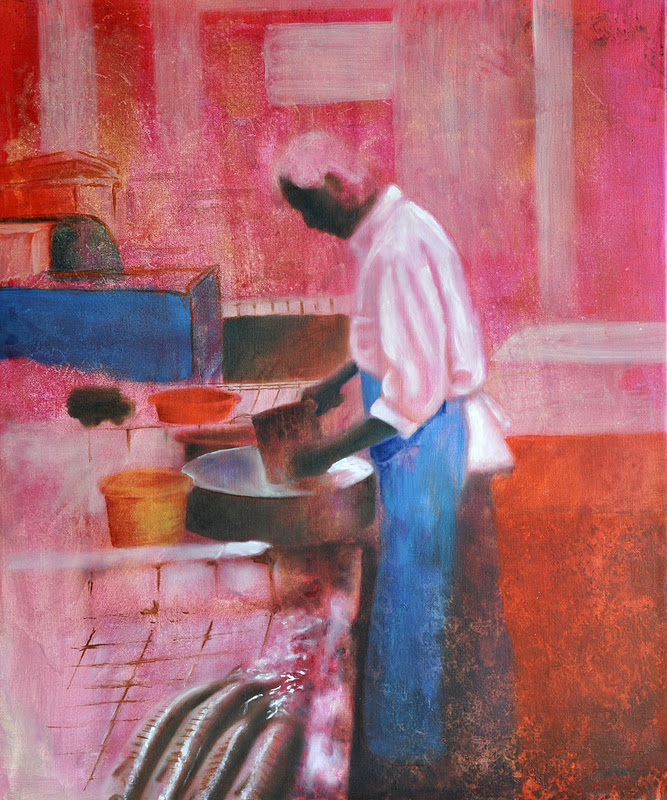
Thursday, 1 December 2011

11 YEARS OF SUSTAINING TANJONG HERITAGE ART COMPETITION

Just came back from the Official Award Ceremony of 2011 Tanjong Heritage Art Competition at Novotel Hotel, Kuala Lumpur. 

Congratulations to  :
1. All the winners (art students) 
2. All their lecturers or mentors
3. All the participating art schools (especially those with winning entries)

...and most importantly, to Tanjong Public Limited Company (TPLC), which has been organizing this competition for an amazing 11 years without any break. So far, despite being taken as more 'traditional' (in its categorization of entries), it has been one of the most 'sustainable' art competitions in the country. The competition, though considered as 'minor' in comparison to other more louder national level art competitions, has been a 'rite of passage' so-to-speak for many aspiring young art students. Few of them have even become emerging and major young artists in the country today. 

Congratulations and a big thank you all the TPLC staff members for their professionalism in handling everything.

Thank you also to all my fellow judges, Assoc. Prof. Jailani Abu Hassan (visual artists/lecturer at UiTM), Lawrence Loh (conservation architect), Dr. Kim Paik Lah (science education specialist), Elizabeth Cardosa (Badan Warisan) and Puan Wairah Marzuki (ex-Director General of the then National Art Gallery). Assoc. Prof. Fauzan Omar (USM) was supposed to be one of the judges but he could not make it then due to illness. 

Art competition is more than just a form of acknowledgment and validation. If approached positively (minus emotion-laden sentiment and overblown ego), it can be a valuable testing and learning experience (in fact, for the judges as well). Beyond simply 'winning' the prizes, it teaches art students about having a 'winning' spirit and attitude. Other than testing oneself, it prepares the students to deal with the ebb and flow of our increasingly highly competitive art scene (or matrix). It can also be reflective of some important dimension of being an artist, that is to sustain, preserver and survive with a winning attitude (even in what appear to be losing, on the surface). 

Personally when it comes to art competition, I have been in multiple positions - a student participant, a loser (entries rejected even from being exhibited), a sore loser and emotional critic (of judges' choice), an award winner, a judge, a chief judge, and even an adviser. I have been judging numerous art competitions, I lost count already. When it comes to judging art competition, it involves subjective evaluation (and eventual heated debates) by more than one person (no matter how 'objective' and detail the judging guideline or criteria can be). Nobody can be satisfied. 

What is more important is knowledge production, that is how one can learn from a competition and how a particular competition can contribute in developing a body of knowledge for further discourses and references.   

I have given my comments on the entries in my previous blog entry, so no need to repeat here.

Just to note that I was pleased to meet few proud lecturers who came along to give their winning students moral support and encouragement. Amongst them include my guru/artist Ponirin Amin (UiTM), my ex-student Suhaimi Tohid (now teaching at UiTM too), Dato Raja Zahabuddin (Dean, School of Art & Design UNISEL), Hashim Hassan (UNISEL), Zaim (Part-time lecturer at UNISEL) and Ricardo Chaves (Equator Art Academy, Penang). Sadly, and ironically this year, USM students didn't receive any prize. I'm not involved in teaching the fine art students in USM, so I'm in no position to comment here.

I had a good time chatting with Dato Robert Cheim, Chairman of the TPLC, Mr. Gerard (forgot his position, but definitely up there. Sorry Gerard!) and all the judges. Amongst many things (in between poking fun and cracking jokes), we talked about the sustainability of the competition; the need for TPLC to start seriously re-collect, document, evaluate, insure and manage their growing art collection professionally; the next steps for the winning students; the need for art students to know and understand the 'structure/system/matrix' that which they will operate within if they decided to be practicing artists; and the need for art students to  read, and develop theoretical or critical thinking skill. Even the business of art as well as the economics, are now taken as integral (not isolated) parts of cultural studies and critical theories, where everything is inter-connected. In a globalized (and googlelized) world of post-capitalist society that we are connected to now, economy is one of the major driving forces in the arts that can't be brushed aside.

The role played by passionate and supporting lecturers in guiding their participating students is also crucial. Committed, passionate and supporting lecturers play a major role in augmenting like-wise students, thus the sustainability and quality of entries. During the judging, I had a disturbing hunch that such species are beginning to become extinct. I hope I am wrong.

Enough whining! 

Time to see pictures of the winning works (with apology for not being able to put the details, too tedious). Enjoy.....


Drawing category:


Mixed media category:


Oil/Acrylic category:


Printmaking category :


Watercolor category:


For my comments, click on
http://hasnulsaidon.blogspot.com/2011/09/inteprete-heritage-please-dont-just.html

DEKAT DI JANTUNG YU XIN

DEKAT DI JANTUNG YU XIN Apa yang tersurat di wajah mungkin tak sama denga apa yang dibaca oleh ECG. Ini yang diterokai oleh Yang Yu Xin. Dia...